
2026.11.06
How to Choose a Pillow for Side Sleeping: Height, Shape and Signs It Doesn’t Fit
You sleep on your side, yet wake up with a stiff neck or sore shoulders. If you find your arm tucked under the pillow at night, or the pillow has slipped away by morning, your current pillow may not be the right fit. When you lie on your side, your lower shoulder lifts your head and leaves a gap about as wide as your shoulder, which is why the right pillow height matters so much in this position. This article covers the pillow height and shape that suit side sleepers, the signs that a pillow doesn’t fit, and how to test pillows in store.
Why Pillow Height Matters for Side Sleepers

A pillow’s job is to fill the gap between your head and neck and the mattress. That gap is very different when you lie on your back and when you lie on your side. For a comparison of heights by sleeping position, see “Which Sleeping Position Is Best? Back, Side and Stomach Sleeping, and Pillow Height.”
Your shoulder width creates a gap under your head and neck
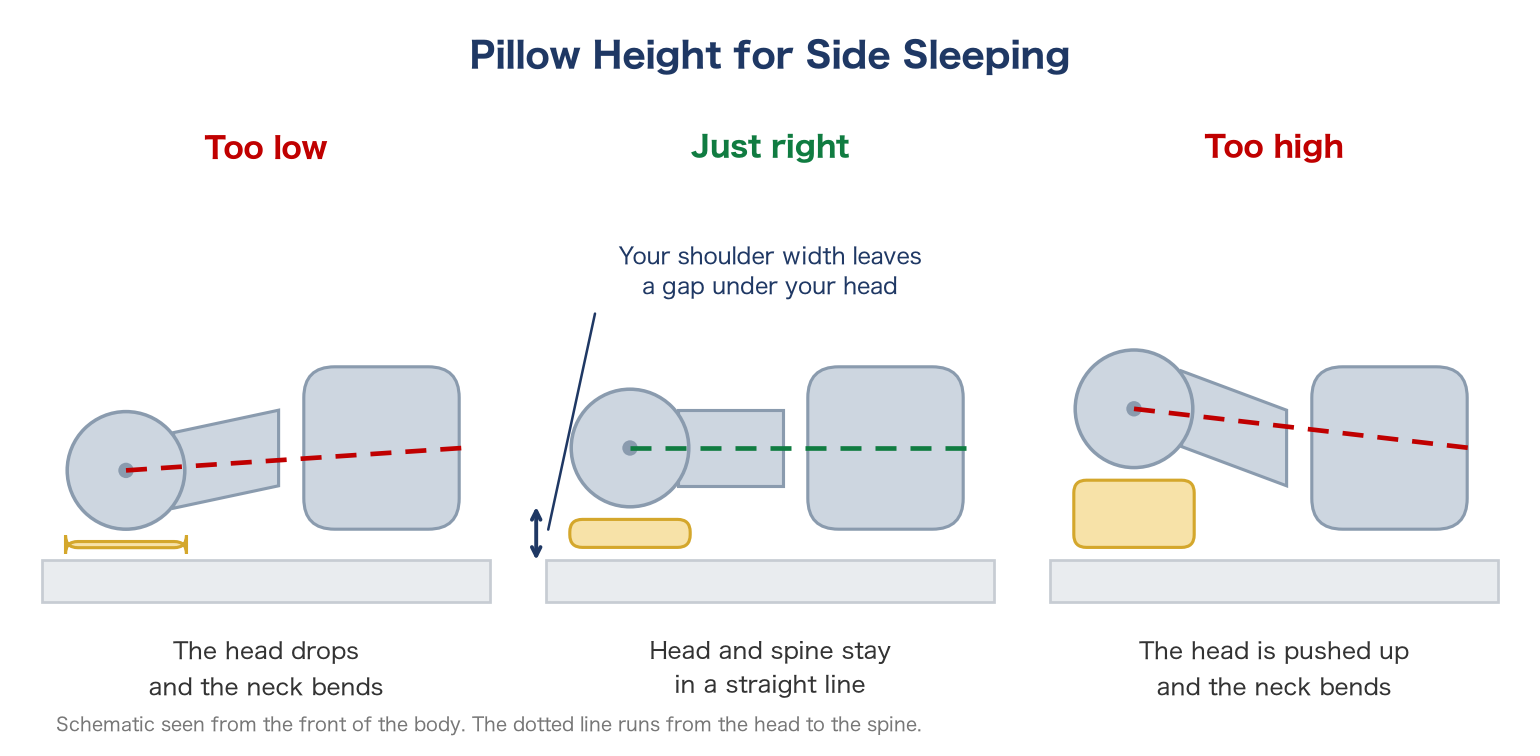
On your back, the pillow fills the space under the back of your head and the curve of your neck. On your side, your body rests on the lower shoulder against the mattress. Your head sits higher by about the width of that shoulder, so the gap is larger than when you lie on your back. [1]
If you use a low pillow suited to back sleeping while lying on your side, your head tends to drop toward the mattress and your neck tilts. When you lie on your side, keep your shoulder on the mattress rather than on the pillow.
Seen from the side, your head and spine should form a straight line
Picture yourself lying on your side, viewed by someone standing beside the bed. Does the line through the center of your forehead, nose and chin continue straight down to the center of your chest? If that line doesn’t bend at the neck and runs roughly parallel to the mattress, the height is about right. [1]
If the pillow is too low, your head drops toward the mattress. If it is too high, your head is pushed up toward the ceiling. Either way, the line bends at the neck and your head and spine no longer form a straight line.
How to Choose a Pillow for Side Sleeping
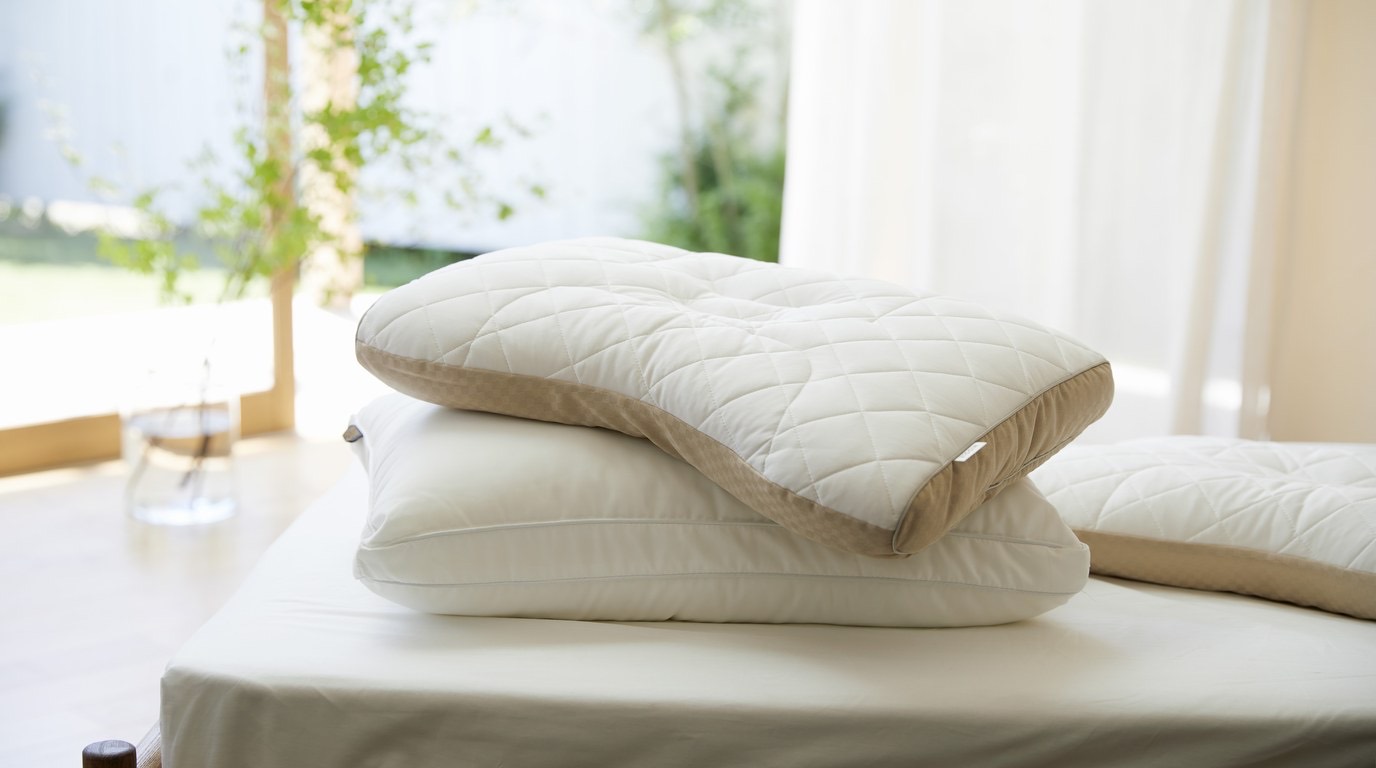
Look at four things when choosing a pillow for side sleeping: height, how it pairs with your mattress, firmness and shape. Each one affects the height at which your head is supported when you lie down.
Consider height in terms of shoulder width and how much the pillow sinks
The pillow height you need on your side depends first on your shoulder width. The broader your shoulders, the larger the gap under your head and the higher the pillow that fits. Build around the shoulders varies from person to person even at the same height, so your body height alone doesn’t decide it. [1]
Another point that is easy to overlook is the height after your head sinks in. The thickness you feel when you pick up a pillow is only its height before your head rests on it. The softer the pillow, the more it sinks under the weight of your head. Two pillows of the same thickness won’t necessarily give the same height once you lie down.
Research so far has not settled on a specific height in centimeters for side sleepers. Studies point to what to check, such as neck angle and the pressure on the pillow, but there is not yet enough evidence to set a recommended range. Rather than choosing by numbers, it is more reliable to lie down and check the height after the pillow sinks. [2]
With a soft mattress, a lower pillow often fits better
When you lie on your side, your shoulder and hip are what sink into the mattress. The softer the mattress, the deeper your shoulder sinks and the smaller the gap under your head becomes. That is why a lower pillow tends to suit a soft mattress. On a firmer mattress, your shoulder sinks less and more of the gap remains, so a higher pillow tends to fit.
In other words, you can’t decide the right pillow height for side sleeping by looking at the pillow alone. Even for the same person with the same pillow, the fit changes when the mattress underneath changes.
Choose a firmness that keeps your head from sinking too far and supports under your neck
Firmness affects not only how a pillow feels but also how well it holds its height. A pillow that is too soft lets your head sink after a while, so a height that fit at first may become too low. A pillow that is too firm touches only a small area of your head and tends to leave a gap under your neck. Aim for a pillow that keeps your head from sinking too far and also fills the space under your neck.
Firmness is hard to judge from words or numbers alone. Touch and compare pillows with different feels, from softer to firmer. The key is to rest your head on the pillow in a side-lying position and check that it supports you all the way under your neck.
If you turn over often, choose a shape with higher sides and enough width
Even side sleepers don’t stay in the same position all night. Lying on your side and lying on your back call for different heights under your head. A pillow with a lower center and higher sides makes it easier for one pillow to suit both positions.
On your back, your head rests on the lower center. On your side, it rests on the higher side. What side sleepers should check is whether the height of those sides matches their shoulder width. If you choose by the center height alone, the pillow may be too low once you turn onto your side.
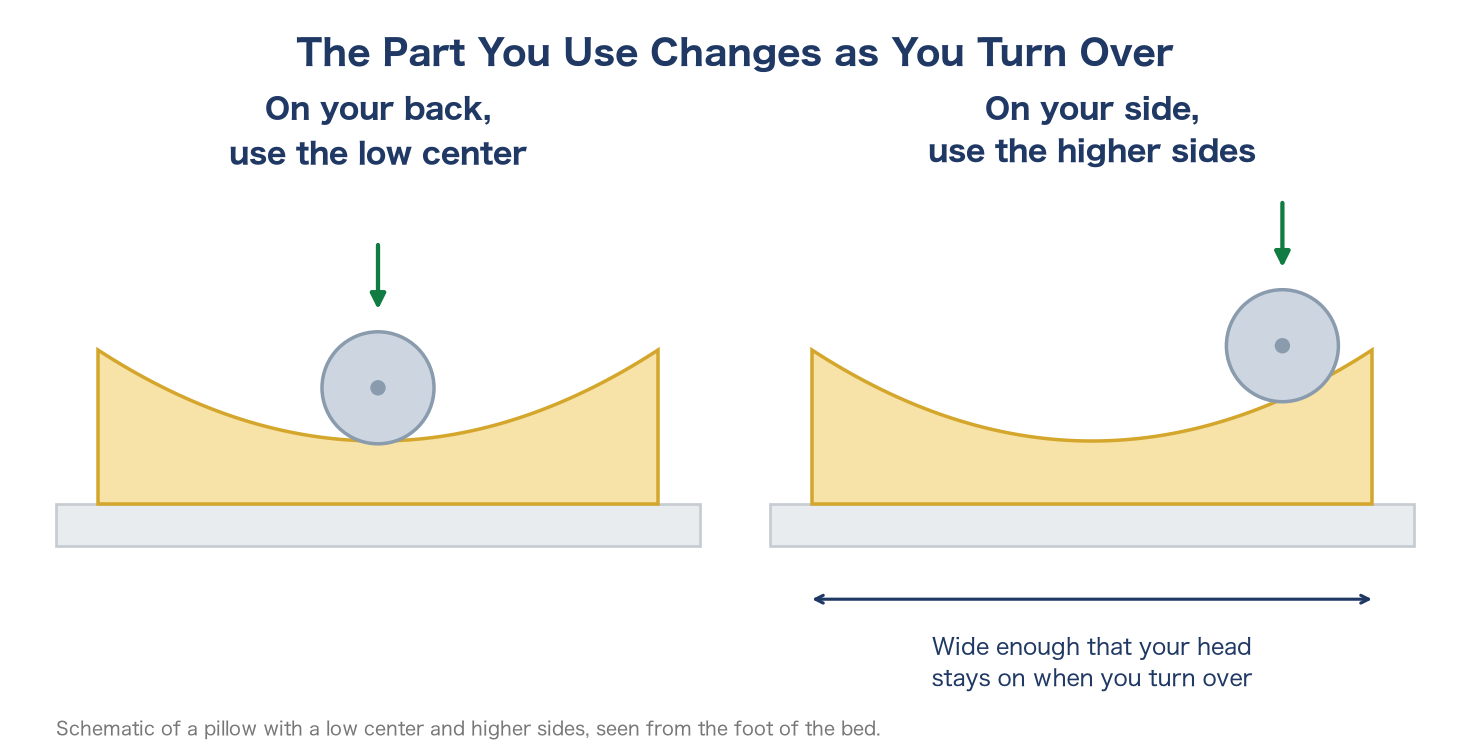
Also pay attention to the pillow’s width. When you turn onto your side, your head moves from the center toward the edge. Without enough width, your head can slip off the pillow each time you turn over. Check that the pillow is wide enough for your head to stay on the sides whichever way you turn from your back.
Signs Your Pillow Doesn’t Fit When You Sleep on Your Side
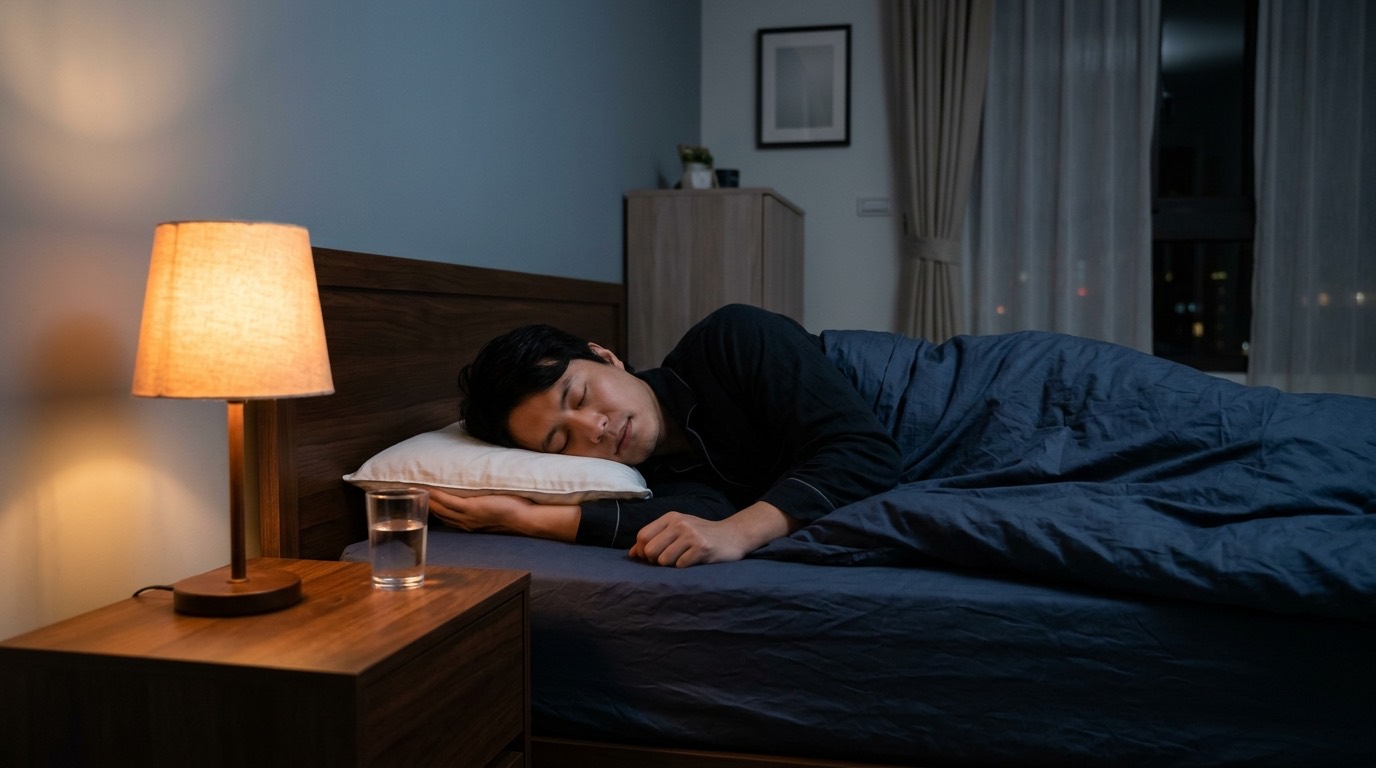
Whether your current pillow suits side sleeping often shows in your habits during sleep and how things look in the morning. Three things are easy to notice yourself: where your arm goes, what you do with the pillow and where your head is in the morning.
If you keep waking up with discomfort in your neck or shoulders, take it as a cue to review your pillow’s height and shape. For what to do when you can’t turn your neck, see “How to Deal With a Stiff Neck From Sleeping: Cold or Heat, What to Do From Day One and What to Avoid.”
Wanting to tuck your arm under the pillow means it is too low
If you feel like sliding your arm under the pillow when lying on your side, the pillow may be too low. Folding the pillow in half to stack it, or hunching your shoulder up toward your head, are the same kind of habit. In each case you are trying to fill the gap left by your shoulder width with your arm, a folded pillow or a raised shoulder. Even if it doesn’t bother you at bedtime, check whether your arm is under the pillow when you wake up in the night.
Wanting to push the pillow away means it is too high
When a pillow is too high, lying on your side pushes your head up toward the ceiling and bends your neck upward. If you end up sleeping without the pillow, or flatten it with your hand before you lie down, the pillow may be too high. People usually push the pillow away while asleep, so check where your pillow is when you wake up.
Your head ending up at the edge means the width or shape doesn’t fit
Do you wake up with your head on the edge of the pillow, or off it altogether? Repositioning the pillow several times a night is the same kind of sign. The pillow may not be wide enough for the range your head moves as you turn over.
Another possibility is the shape: the height of the sides, where your head rests when you lie on your side, may not match your shoulder width. This is why people who turn over a lot should choose by the height and width of the sides.
How to Test a Pillow for Side Sleeping
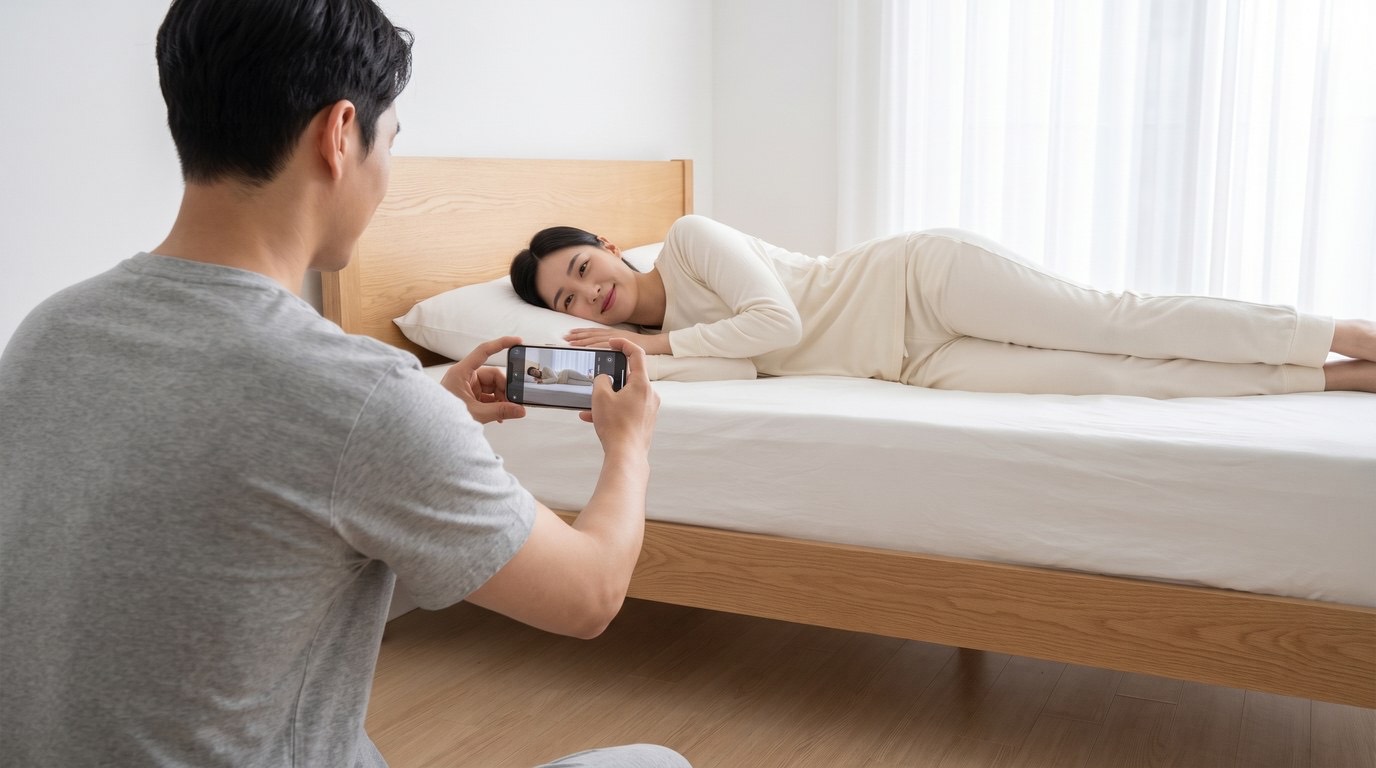
You can’t tell whether a pillow suits side sleeping from numbers or appearance alone. When you try pillows in store, lie down and check the following three points.
Ask someone to check from the side that you form a straight line
You can’t see for yourself whether your head and spine form a straight line while lying down. Ask a family member, a companion or a staff member to look from the side of the bed. What they should check is whether the line through your forehead, nose and chin bends up or down at the neck. If they take a photo from the side, you can check it with your own eyes too.
When you try a pillow, don’t decide the moment you lie down. As your body relaxes, the way you sink into the pillow and mattress changes slightly. Stay in the same position for a while until your shoulders and neck relax, then ask them to look.
Try turning onto your back, not just lying on your side
A pillow that felt just right on your side may be too high on your back. After checking the height on your side, turn straight onto your back. Ask the other person to check that your chin isn’t pulled toward your chest and your neck isn’t bent forward.
If you sleep on both sides, also check that you form a straight line when facing the other way. It also helps to check that your head doesn’t catch on the edge of the pillow or slip off the sides as you turn over.
Test on a surface close to the firmness of your mattress at home
If the bed in the store is firmer than your mattress at home, a pillow that fit in the store may feel too high at home. When testing, lie on bedding that is as close as possible to the firmness of your mattress at home.
To make this easier, check before you go whether your mattress at home is on the softer or firmer side. Telling staff roughly how far your shoulder sinks when you lie down also helps them narrow down the choice. If you know the approximate thickness of your mattress, mention that too.
Find the Right Height for Side Sleeping at Nishikawa Da’an Store

The Custom-Made Pillow at Nishikawa Da’an Store is made to order as we measure, touch and test it with you lying down. All the side-sleeping checks covered in this article can be done right there in the store.
What matters most for side sleepers is the ability to fine-tune the height to their sleeping posture. Some customers are amazed by a difference of just 5 mm.
In store, start by telling our sleep professional, the Sleep Advisor, about any concerns with your current pillow and the feel you prefer. We measure the height of the back of your head and the curve of your neck while you stand, because at Nishikawa Da’an Store we regard a natural standing posture as the ideal sleeping posture.
Based on the results, we divide the inside of the pillow into up to 14 upper and lower sections and fine-tune the height. You can also touch and compare fill materials, from softer to firmer, to choose the one you like.
When you lie down to test the pillow, we adjust the height on a mattress close to the one you use at home.
Because the pillow is made on the spot, you can take it home the same day. Depending on stock of parts and materials, delivery may take a few days.
For one year after purchase, we readjust your pillow free of charge as many times as you need. You can also come to us about how it pairs with your mattress at home or if the fit fades with use. Please ask in store for details on adjustment and maintenance.
Learn more about Custom-Made Pillows
Book a Visit / Bedding Consultation on LINE
References
*The content of this article is for general information only. If discomfort in your neck or shoulders continues, or if it affects your daily life, please consult a medical professional.
*Some products and materials mentioned in this article may not be available at Nishikawa Da’an Store. Please ask in store for details.
*All photos are for illustration purposes only.
